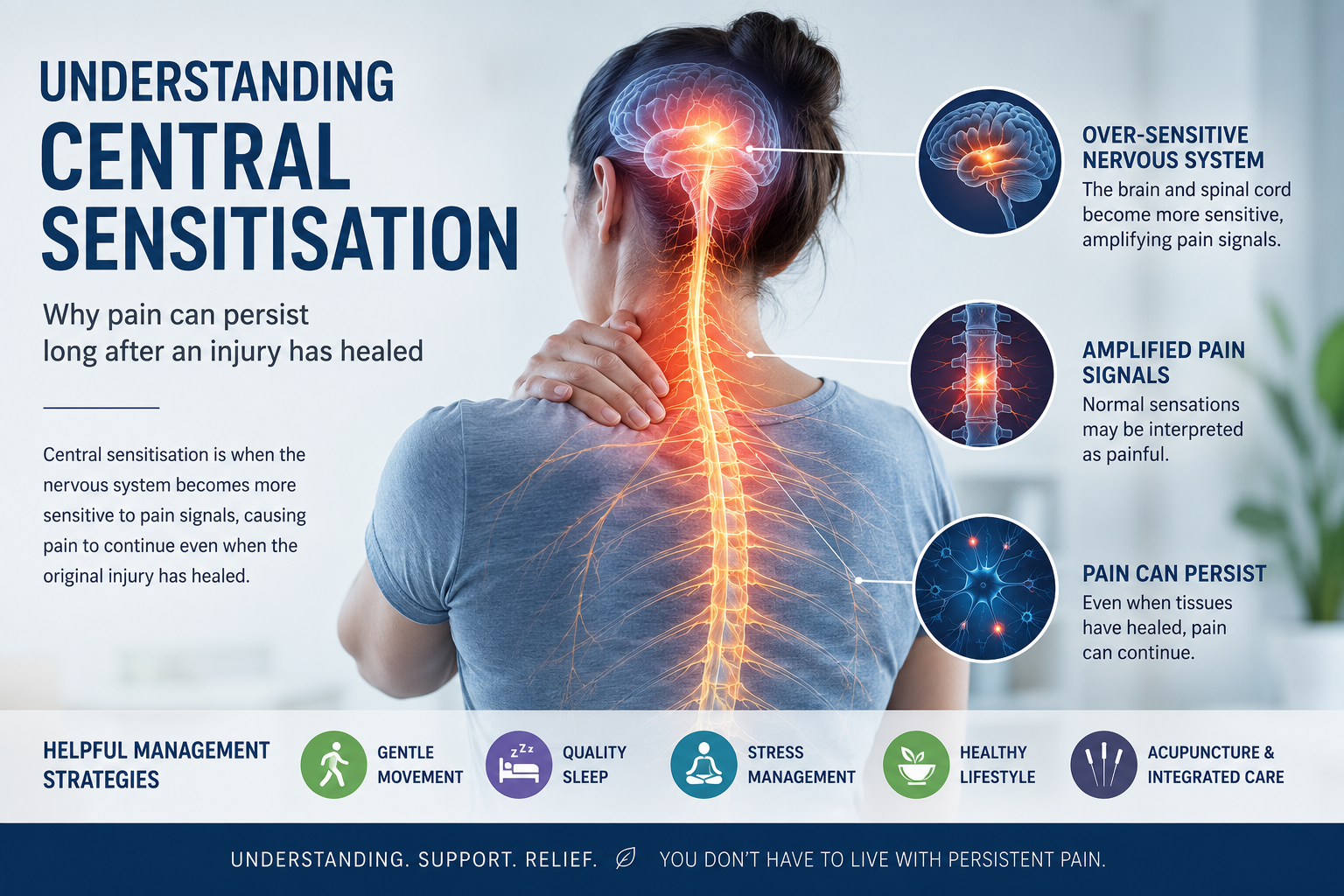
Understanding Central Sensitisation: Why Pain Can Persist Long After an Injury Has Healed
Understanding Central Sensitisation
If you've been living with pain for months or even years, you may have been told that scans and tests show very little is wrong. Yet your pain remains real, persistent and often frustrating.
One possible explanation is a process known as central sensitisation. It is increasingly recognised by healthcare professionals as an important factor in many long-term pain conditions.
Understanding central sensitisation can help explain why pain sometimes continues long after an injury has healed and why effective treatment often involves more than simply addressing the original area of injury.
What Is Central Sensitisation?
Central sensitisation is a change in the way the central nervous system, including the brain and spinal cord, processes pain.
Normally, pain acts as a protective warning system. When tissues are injured, nerves send signals to the brain, allowing us to react and protect ourselves while healing takes place.
However, when pain persists for an extended period, the nervous system can become increasingly sensitive. It may begin responding more strongly to normal sensory information, effectively turning up the body's "pain volume."
This does not mean the pain is imagined. The pain is genuine, but the nervous system has become more sensitive than necessary.
Why Does It Happen?
Researchers believe several factors may contribute to central sensitisation, including:
- Persistent pain following an injury
- Repeated episodes of pain
- Surgery
- Chronic inflammation
- Poor sleep
- Emotional stress
- Long-term illness
- Reduced physical activity
Not everyone develops central sensitisation, and the reasons vary from person to person.
Common Signs of Central Sensitisation
People experiencing central sensitisation may notice:
- Pain lasting longer than three months
- Pain that seems greater than expected
- Pain spreading beyond the original injury
- Increased sensitivity to touch or pressure
- Muscle tension throughout the body
- Fatigue
- Difficulty sleeping
- Problems with concentration or "brain fog"
- Symptoms that fluctuate from day to day
These symptoms are commonly associated with persistent pain conditions rather than a single injury alone.
Conditions Commonly Associated with Central Sensitisation
Central sensitisation has been linked with a number of long-term health conditions, including:
- Fibromyalgia
- Persistent lower back pain
- Neck pain
- Osteoarthritis
- Rheumatoid arthritis
- Migraine
- Tension-type headaches
- Temporomandibular joint (TMJ) disorders
- Irritable bowel syndrome (IBS)
- Chronic pelvic pain
Not every person with these conditions experiences central sensitisation, but it is recognised as an important factor for many individuals.
Why Scans Don't Always Explain Chronic Pain
One of the most confusing aspects of persistent pain is that X-rays, MRI scans or blood tests sometimes show only minor changes.
This can leave people wondering whether their pain is being taken seriously.
Research has shown that structural changes seen on imaging do not always match the level of pain someone experiences. Some people with significant changes have little discomfort, while others experience considerable pain despite relatively normal findings.
This is one reason why healthcare professionals increasingly consider how the nervous system processes pain, rather than focusing solely on structural changes.
Can Central Sensitisation Improve?
Yes.
Although the nervous system has become more sensitive, it is also capable of adapting. This process is sometimes referred to as neuroplasticity.
Many people find their symptoms improve through a combination of approaches tailored to their individual needs.
Treatment may include:
- Appropriate exercise
- Gradual increases in activity
- Improving sleep quality
- Stress management
- Education about pain
- Physiotherapy
- Psychological approaches where appropriate
- Lifestyle changes
- Acupuncture as part of a wider pain management plan
The aim is often to help calm an over-responsive nervous system while improving confidence in movement and everyday activities.
How Lifestyle Can Influence Persistent Pain
Lifestyle factors can have a meaningful impact on how the nervous system functions.
Helpful strategies may include:
Prioritising Sleep
Poor sleep can increase pain sensitivity. Establishing consistent sleep habits may help improve recovery and reduce symptom flare-ups.
Staying Active
Gentle movement supports joint health, circulation and nervous system function. Walking, swimming, tai chi and mobility exercises are often well tolerated.
Managing Stress
Living with persistent pain can be stressful, and stress itself may increase the nervous system's sensitivity.
Breathing exercises, mindfulness, spending time outdoors and enjoyable hobbies may all contribute to improved wellbeing.
Supporting General Health
Eating a balanced diet, maintaining a healthy weight and managing long-term health conditions can all contribute to better overall pain management.
Can Acupuncture Help with Chronic Pain?
Acupuncture is recommended in some clinical guidelines for certain persistent pain conditions and is used by many people as part of a broader pain management approach.
Research suggests acupuncture may influence pain through several mechanisms, including:
- Stimulating the body's natural pain-relieving chemicals
- Supporting healthy blood flow
- Reducing muscle tension
- Influencing how the nervous system processes pain
Every individual is different, and treatment should always be based on a thorough assessment of symptoms, medical history and personal goals.
When Should You Seek Professional Advice?
It may be helpful to seek an assessment if:
- Your pain has lasted longer than three months.
- Everyday activities are becoming more difficult.
- Sleep is regularly affected.
- Pain is limiting work, hobbies or exercise.
- Previous treatments have provided only short-term relief.
- You're unsure why your pain continues despite healing.
Early assessment can help identify contributing factors and guide an appropriate management plan.
Chronic Pain Support in Stamford
If you are living with persistent pain, arthritis, fibromyalgia or another long-term pain condition, understanding how the nervous system contributes to pain can be an important first step.
At Duncan Ford Acupuncture, I provide personalised assessments for people living with chronic pain in Stamford and the surrounding area. Treatment plans are tailored to each individual and may include acupuncture alongside practical advice on movement, lifestyle and long-term pain management.
If you would like to learn more or discuss whether acupuncture may be appropriate for your situation, please get in touch or book an initial consultation.
Frequently Asked Questions
Is central sensitisation permanent?
Not necessarily. Many people experience improvements with an appropriate combination of education, movement, lifestyle changes and treatment.
Does central sensitisation mean the pain is psychological?
No. The pain is real. Central sensitisation refers to changes in how the nervous system processes pain rather than suggesting the symptoms are imagined.
Can exercise make central sensitisation worse?
Exercise should usually be introduced gradually and tailored to the individual. Appropriate movement is often an important part of recovery, but pacing is essential.
Can acupuncture help central sensitisation?
Acupuncture may form part of a wider pain management approach for some people with persistent pain. A healthcare professional can advise whether it may be appropriate based on your individual circumstances.
Conclusion
Central sensitisation provides one explanation for why pain can continue even after tissues have healed. By understanding how the nervous system contributes to persistent pain, many people find they can approach recovery with greater confidence and realistic expectations.
While there is rarely a single solution, a personalised approach that combines education, healthy lifestyle habits, appropriate movement and evidence-informed treatments may help improve both symptoms and quality of life.