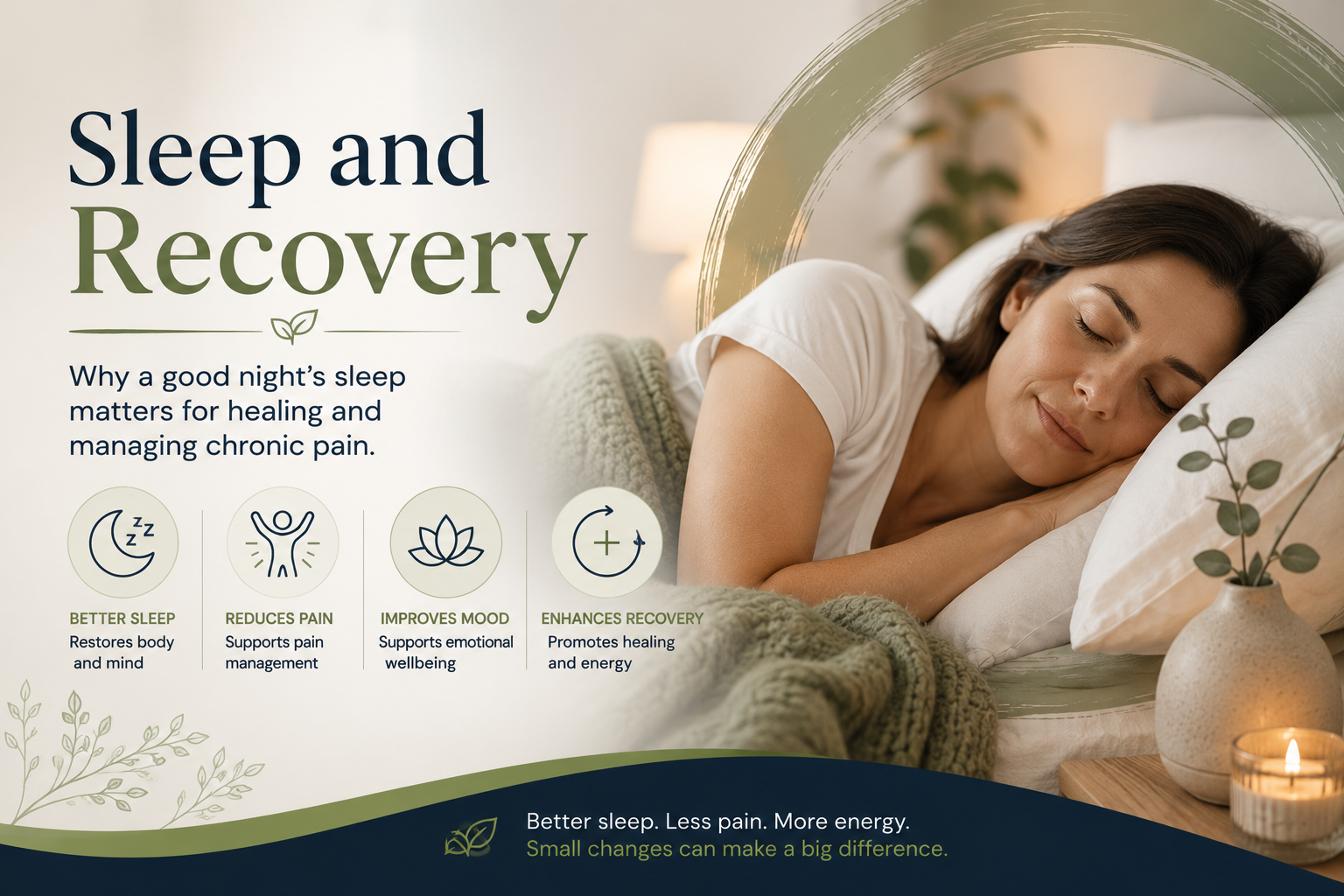
Sleep and Recovery: Why a Good Night's Sleep Matters When Living with Chronic Pain
Sleep and Recovery: Why a Good Night's Sleep Matters When Living with Chronic Pain
Sleep is one of the most important foundations of good health. It supports physical recovery, helps regulate the immune system, strengthens memory and plays a vital role in both physical and mental wellbeing.
For people living with chronic pain, however, getting a good night's sleep is often easier said than done.
Pain can make it difficult to fall asleep or stay asleep, while poor-quality sleep can make pain feel more intense the following day. This creates a cycle that can be difficult to break.
Understanding the relationship between sleep and recovery is an important step towards managing chronic pain and improving overall quality of life.
Why Is Sleep So Important?
During sleep, the body carries out many essential repair and recovery processes.
While we sleep, the body:
- Repairs muscles and tissues
- Produces important hormones
- Strengthens the immune system
- Consolidates memories and learning
- Helps regulate mood
- Restores energy levels
Sleep is not simply a period of rest—it is an active biological process that supports almost every system within the body.
The Relationship Between Sleep and Chronic Pain
Research has shown a strong connection between sleep quality and pain.
People living with persistent pain are more likely to experience:
- Difficulty falling asleep
- Frequent waking during the night
- Lighter, less restorative sleep
- Feeling tired despite spending enough time in bed
At the same time, poor sleep has been shown to increase pain sensitivity.
This means that after a poor night's sleep, everyday aches and pains may feel more noticeable and existing chronic pain may become more difficult to manage.
Why Poor Sleep Can Increase Pain
Pain is processed by the nervous system, and sleep plays an important role in how the brain regulates pain signals.
When sleep is disrupted:
- The nervous system may become more sensitive.
- Pain thresholds may decrease.
- Inflammation may increase.
- Fatigue can reduce physical activity.
- Mood and stress levels may worsen.
These factors can contribute to a cycle where poor sleep leads to increased pain, and increased pain makes sleeping even more difficult.
Chronic Pain Conditions Commonly Associated with Sleep Problems
Sleep disturbance is common in many persistent pain conditions, including:
- Fibromyalgia
- Osteoarthritis
- Rheumatoid arthritis
- Chronic lower back pain
- Neck pain
- Migraine
- Chronic fatigue syndrome
- Autoimmune conditions
Improving sleep quality is often an important part of managing these conditions.
The Different Stages of Sleep
Sleep occurs in several stages throughout the night.
These include:
Light Sleep
The body begins to relax as breathing and heart rate slow.
Deep Sleep
This is the stage most closely associated with physical recovery.
During deep sleep, the body repairs tissues, strengthens the immune system and releases growth hormone involved in healing and recovery.
REM Sleep
Rapid Eye Movement (REM) sleep plays an important role in emotional wellbeing, learning and memory.
Healthy sleep involves cycling through each of these stages several times every night.
Signs You May Not Be Getting Restorative Sleep
You may not be getting enough quality sleep if you regularly:
- Wake feeling tired
- Struggle to concentrate
- Feel sleepy during the day
- Depend on caffeine to stay alert
- Wake several times each night
- Feel that sleep never leaves you refreshed
Persistent poor sleep should always be discussed with an appropriate healthcare professional.
Practical Ways to Improve Sleep
Small, consistent changes often have the greatest long-term benefit.
Keep a Regular Sleep Schedule
Try to go to bed and wake up at similar times each day, including weekends.
A consistent routine helps regulate your body's internal clock.
Create a Relaxing Bedtime Routine
An hour before bed, consider activities such as:
- Reading
- Gentle stretching
- Breathing exercises
- Meditation
- Listening to calming music
These activities help signal to the brain that it is time to wind down.
Limit Screen Time Before Bed
Phones, tablets and computers emit blue light that may interfere with the body's natural production of melatonin, the hormone that helps regulate sleep.
Where possible, reduce screen use during the hour before bedtime.
Keep Your Bedroom Comfortable
Many people sleep better in a room that is:
- Cool
- Quiet
- Dark
- Comfortable
Simple changes such as blackout curtains or earplugs may improve sleep quality.
Stay Physically Active
Regular physical activity has been shown to improve sleep quality.
Gentle activities such as walking, swimming, Tai Chi or mobility exercises may be particularly helpful for people living with chronic pain.
Avoid vigorous exercise immediately before bedtime.
Watch Your Caffeine and Alcohol Intake
Caffeine may affect sleep for several hours after consumption.
Alcohol may help people fall asleep initially but often disrupts deeper stages of sleep later in the night.
Managing Stress to Improve Sleep
Stress and anxiety commonly affect sleep.
Living with chronic pain itself can become a source of ongoing stress.
Relaxation strategies that some people find helpful include:
- Mindfulness
- Meditation
- Gentle yoga
- Controlled breathing
- Spending time outdoors
- Journalling
Finding approaches that work for you can help prepare both the mind and body for sleep.
Where Does Acupuncture Fit?
Many people living with chronic pain choose acupuncture as part of a broader approach to improving their wellbeing.
Some research suggests acupuncture may help improve sleep quality in certain individuals, while also supporting the management of persistent pain.
Although responses vary between individuals, better sleep may contribute to improved recovery, reduced fatigue and an improved quality of life.
Acupuncture should be considered as part of an overall treatment plan rather than a standalone solution.
When Should You Seek Professional Advice?
If poor sleep has continued for several weeks or months, it may be worth speaking to a healthcare professional.
You should seek advice if:
- Pain regularly wakes you during the night.
- Sleep problems affect work or daily activities.
- Fatigue is becoming overwhelming.
- You snore heavily or stop breathing during sleep.
- You regularly rely on sleeping tablets.
- Your sleep has changed significantly without an obvious reason.
Identifying the underlying cause can help guide the most appropriate treatment.
Improving Sleep and Recovery in Stamford
If you're living with chronic pain, improving sleep may be one of the most valuable steps you can take to support your recovery.
At Duncan Ford Acupuncture in Stamford, treatment plans are tailored to the individual and may include acupuncture alongside practical advice on movement, lifestyle and self-management strategies designed to support long-term wellbeing.
The aim is not simply to reduce pain, but to help improve sleep, movement, confidence and quality of life.
Frequently Asked Questions
Can poor sleep make chronic pain worse?
Yes. Research suggests that poor-quality sleep can increase pain sensitivity and make persistent pain more difficult to manage.
How many hours of sleep do adults need?
Most adults benefit from around seven to nine hours of sleep each night, although individual needs vary.
Can acupuncture help improve sleep?
Some studies suggest acupuncture may improve sleep quality for certain individuals. It may be considered alongside other evidence-based approaches to managing sleep difficulties.
Should I exercise if I'm tired?
Gentle, appropriate physical activity often improves both sleep and chronic pain over time. If you're unsure where to start, seek advice from a healthcare professional.
Conclusion
Sleep is far more than simply resting at the end of the day—it is one of the body's most important recovery processes.
For people living with chronic pain, improving sleep may help reduce pain sensitivity, support healing, improve energy levels and enhance overall quality of life.
While there is rarely a single solution, developing healthy sleep habits and addressing the factors that interfere with sleep can play an important role in long-term recovery. Combined with appropriate medical care, regular movement and personalised treatment where needed, better sleep can become one of the strongest foundations for living well with chronic pain.