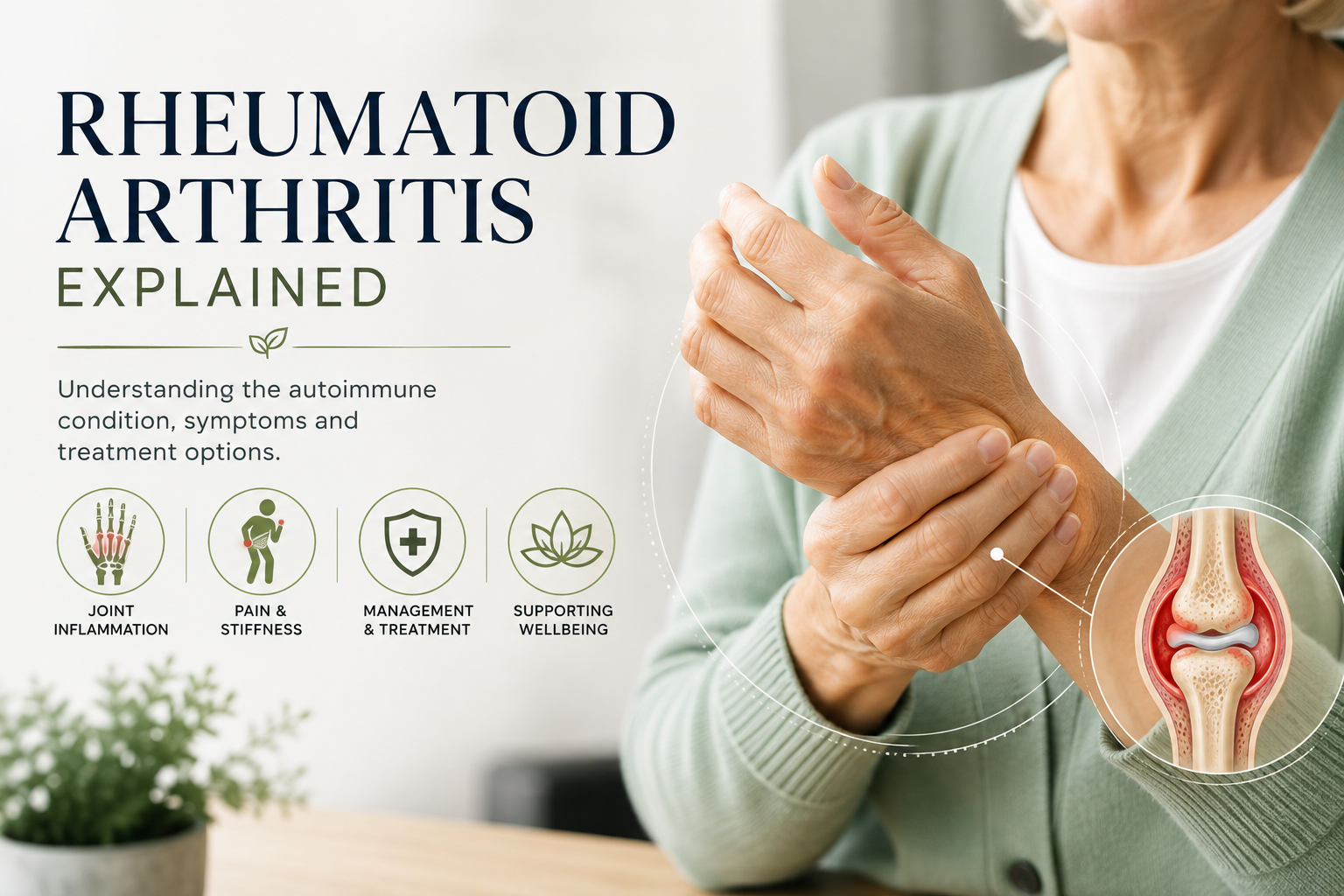
Rheumatoid Arthritis Explained: Symptoms, Causes and Treatment Options
Rheumatoid Arthritis Explained
Rheumatoid arthritis (RA) is a long-term autoimmune condition that primarily affects the joints. Unlike osteoarthritis, which develops through wear and tear over time, rheumatoid arthritis occurs when the immune system mistakenly attacks the lining of healthy joints, leading to inflammation, pain and stiffness.
Although RA most commonly affects the hands, wrists and feet, it can involve almost any joint and may also affect other parts of the body.
Early diagnosis and appropriate treatment are important in helping to control inflammation, reduce joint damage and maintain quality of life.
What Is Rheumatoid Arthritis?
Rheumatoid arthritis is an autoimmune disease. This means the body's immune system, which normally protects against infection, mistakenly attacks its own healthy tissues.
In rheumatoid arthritis, the main target is the synovium—the thin lining surrounding the joints.
As inflammation develops, the synovium thickens, producing excess fluid and inflammatory chemicals. Over time, this may damage cartilage, bone, tendons and ligaments if left untreated.
RA usually develops gradually but can sometimes begin quite suddenly.
How Common Is Rheumatoid Arthritis?
Rheumatoid arthritis affects around 1% of the population.
It is more common in women than men and most often develops between the ages of 30 and 60, although it can occur at any age.
What Causes Rheumatoid Arthritis?
The exact cause remains unknown.
Researchers believe several factors contribute to its development, including:
- Genetics
- Changes within the immune system
- Hormonal influences
- Environmental factors
- Smoking
- Obesity
- Certain infections may act as triggers in susceptible individuals
No single factor causes rheumatoid arthritis, and not everyone with risk factors will develop the condition.
Common Symptoms of Rheumatoid Arthritis
Symptoms vary considerably from person to person.
Common symptoms include:
Joint Pain
Pain often develops gradually and may affect several joints simultaneously.
Morning Stiffness
One of the characteristic features of rheumatoid arthritis is stiffness lasting longer than 30–60 minutes after waking.
Many people find movement gradually eases stiffness during the morning.
Swollen Joints
Inflamed joints often appear swollen, warm and tender.
Fatigue
Many people experience significant tiredness that cannot simply be explained by poor sleep.
Fatigue is a common symptom of autoimmune diseases.
Symmetrical Symptoms
Unlike many other joint conditions, rheumatoid arthritis frequently affects both sides of the body.
For example:
- Both wrists
- Both hands
- Both knees
- Both feet
This symmetrical pattern is often an important clue during diagnosis.
Which Joints Are Usually Affected?
RA commonly affects:
- Fingers
- Wrists
- Hands
- Feet
- Ankles
- Knees
- Elbows
- Shoulders
As the condition progresses, larger joints may also become involved.
Can Rheumatoid Arthritis Affect More Than the Joints?
Yes.
Because rheumatoid arthritis is a systemic autoimmune disease, inflammation may occasionally affect:
- Eyes
- Lungs
- Heart
- Blood vessels
- Skin
- Tendons
For this reason, ongoing medical monitoring is important.
How Is Rheumatoid Arthritis Diagnosed?
There is no single test that confirms rheumatoid arthritis.
Diagnosis usually involves:
- Medical history
- Physical examination
- Blood tests
- Imaging such as ultrasound or X-rays where appropriate
Blood tests may include:
- Rheumatoid Factor (RF)
- Anti-CCP antibodies
- C-reactive protein (CRP)
- Erythrocyte Sedimentation Rate (ESR)
Diagnosis is made by considering all of this information together.
How Is Rheumatoid Arthritis Treated?
Modern treatment aims to reduce inflammation, control symptoms and prevent long-term joint damage.
Treatment may include:
Disease-Modifying Anti-Rheumatic Drugs (DMARDs)
These medications target the immune system to slow disease progression.
Biological Therapies
Biologic medications may be recommended when conventional DMARDs are insufficient.
Corticosteroids
Steroids may be used to reduce inflammation during flare-ups or while other medications begin working.
Pain Relief
Pain-relieving medications may help manage symptoms but do not alter the underlying disease process.
Physiotherapy
Exercise programmes help maintain movement, muscle strength and joint function.
Occupational Therapy
Occupational therapists can provide practical advice and equipment to help protect joints during daily activities.
Lifestyle and Rheumatoid Arthritis
Lifestyle changes cannot cure rheumatoid arthritis but may support overall health and symptom management.
Many people benefit from:
Regular Exercise
Low-impact exercise helps maintain mobility, muscle strength and cardiovascular health.
Walking, swimming, cycling and strength training are often recommended.
Maintaining a Healthy Weight
Excess body weight increases stress on joints and may contribute to inflammation.
Eating a Balanced Diet
A Mediterranean-style diet rich in vegetables, fruit, oily fish, olive oil and whole foods supports general health.
Although no specific diet cures RA, balanced nutrition remains important.
Prioritising Sleep
Poor sleep can increase pain sensitivity and fatigue.
Developing healthy sleep habits may improve overall wellbeing.
Managing Stress
Living with a chronic illness can be emotionally challenging.
Relaxation techniques, mindfulness and appropriate support may help people manage stress more effectively.
Can Acupuncture Help Rheumatoid Arthritis?
Acupuncture does not treat the underlying autoimmune process responsible for rheumatoid arthritis.
However, some people choose acupuncture alongside conventional medical care to help manage symptoms such as:
- Joint pain
- Muscle tension
- Stiffness
- Sleep disturbance
- General wellbeing
Research into acupuncture for rheumatoid arthritis is ongoing, and results remain mixed.
Current evidence suggests acupuncture may help some people manage pain and improve quality of life when used alongside standard medical treatment.
It should not replace disease-modifying medication prescribed by a rheumatology team.
Living Well with Rheumatoid Arthritis
Although rheumatoid arthritis is a lifelong condition, many people continue to lead active and fulfilling lives.
Early diagnosis, appropriate medical treatment, regular physical activity and good self-management strategies have transformed outcomes over recent decades.
Working closely with your healthcare team allows treatment to be adjusted as your needs change.
When Should You Seek Medical Advice?
You should arrange an assessment if you experience:
- Persistent joint pain lasting several weeks.
- Morning stiffness lasting longer than 30 minutes.
- Swollen joints.
- Symptoms affecting both sides of the body.
- Unexplained fatigue alongside joint pain.
Early diagnosis gives the best opportunity to control inflammation and reduce long-term joint damage.
Rheumatoid Arthritis Support in Stamford
If you are living with rheumatoid arthritis and would like additional support in managing pain, stiffness or mobility, complementary approaches may form part of your wider care plan.
At Duncan Ford Acupuncture in Stamford, treatment is tailored to the individual and is designed to work alongside conventional medical care. Acupuncture is used to support symptom management and overall wellbeing—it is not a substitute for disease-modifying medication or specialist rheumatology care.
Frequently Asked Questions
Is rheumatoid arthritis the same as osteoarthritis?
No. Osteoarthritis is primarily a degenerative joint condition, while rheumatoid arthritis is an autoimmune disease.
Can rheumatoid arthritis go away?
RA is generally considered a lifelong condition, although many people achieve good disease control through modern treatment.
Does weather affect rheumatoid arthritis?
Some people report that cold or damp weather influences their symptoms, although research findings are mixed.
Is exercise safe?
For most people, appropriate exercise is encouraged and can improve joint function, muscle strength and overall health. Exercise programmes should be tailored to the individual.
Conclusion
Rheumatoid arthritis is a complex autoimmune condition that affects far more than the joints alone. While there is currently no cure, advances in diagnosis and treatment mean many people can successfully manage their symptoms and continue to live active lives.
A combination of medical treatment, regular exercise, healthy lifestyle habits and appropriate supportive therapies can help improve quality of life and maintain long-term joint function. Understanding the condition is an important first step towards managing it effectively.