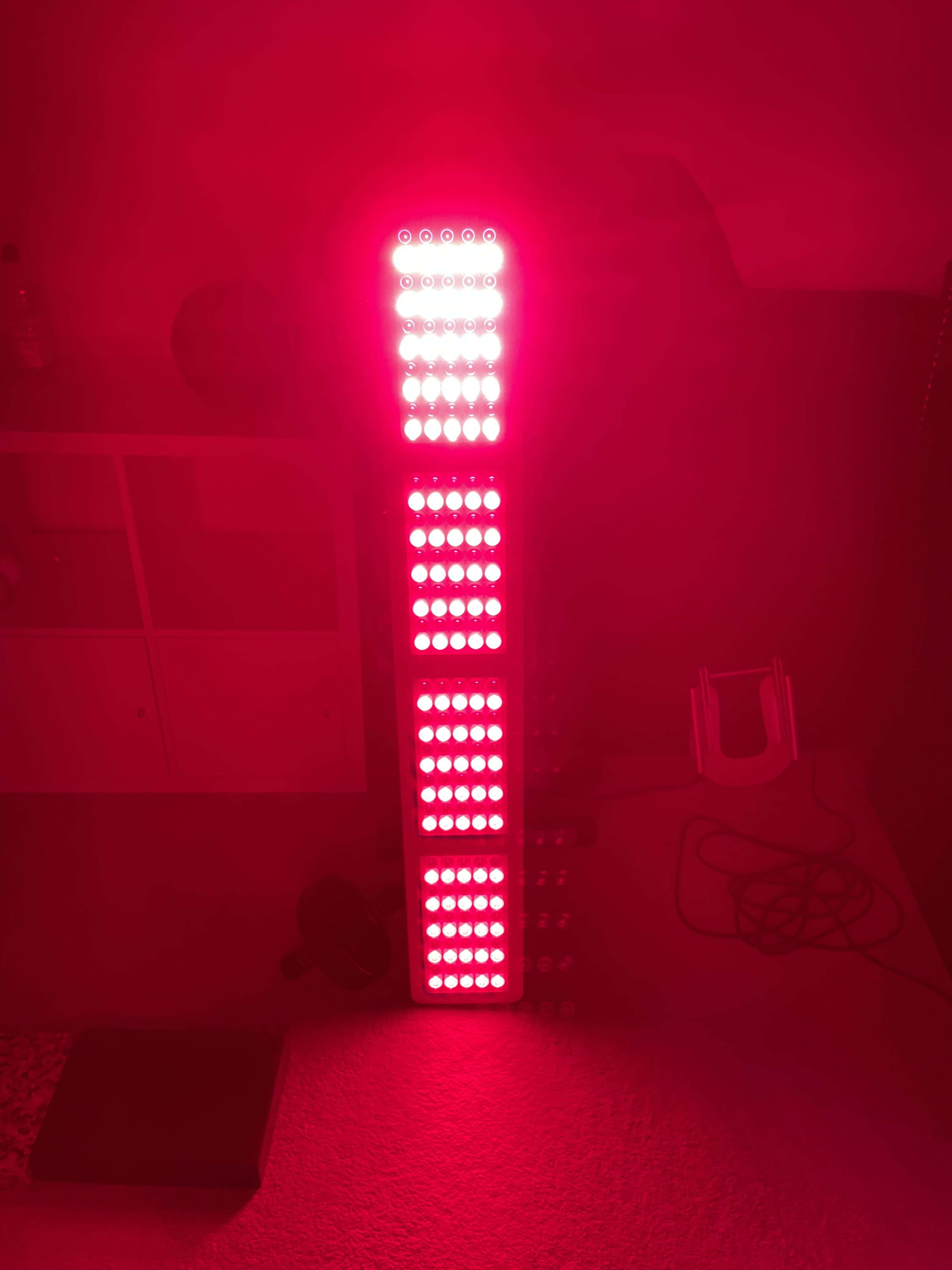
Red Light Therapy for Pain Management: What does the evidence say?
If you’re living with persistent pain, you’ve probably come across a wide range of treatment options. One therapy that has gained increasing attention in recent years is Red Light Therapy (RLT), also known as Photobiomodulation (PBM) or Low-Level Light Therapy (LLLT).
But what exactly is Red Light Therapy, and can it help with pain?
What is Red Light Therapy?
Red Light Therapy uses specific wavelengths of red and near-infrared light that penetrate the skin and underlying tissues. Unlike ultraviolet (UV) light from the sun, these wavelengths do not damage the skin or cause sunburn.
The aim is to deliver light energy to cells, where it is thought to support normal cellular function and tissue repair processes.
Treatment is painless, non-invasive, and usually lasts between 10 and 20 minutes depending on the area being treated.
How Might It Work?
Although research is ongoing, scientists believe Red Light Therapy works by interacting with structures inside cells called mitochondria.
Mitochondria are responsible for producing the energy (ATP) that cells use to function. Laboratory studies suggest that exposure to specific wavelengths of light may:
- Support cellular energy production
- Influence inflammatory pathways
- Improve local circulation
- Encourage tissue repair
- Reduce oxidative stress
These effects may help explain why some people experience reduced pain and improved movement following treatment.
What Conditions Has It Been Studied For?
Research into Red Light Therapy continues to grow. Studies have investigated its use in a variety of musculoskeletal conditions, including:
- Osteoarthritis
- Neck pain
- Lower back pain
- Tendon injuries
- Muscle strains
- Sports injuries
- Temporomandibular joint (TMJ) disorders
- Plantar fasciitis
Some studies have also explored its role in supporting recovery after exercise and reducing delayed onset muscle soreness (DOMS).
Results have generally been encouraging, although outcomes vary depending on the condition being treated, the dosage of light used, and the quality of the research.
What Does the Research Show?
Several systematic reviews and clinical studies suggest that Red Light Therapy may provide modest reductions in pain and improvements in function for certain musculoskeletal conditions.
For example:
- Some people with osteoarthritis have reported improvements in pain and joint stiffness.
- Research into chronic neck pain has found reductions in pain intensity that may persist beyond the treatment period.
- Athletes have shown improvements in muscle recovery in some studies.
However, not every study has found significant benefits, and researchers continue to investigate the most effective wavelengths, treatment durations and protocols.
Overall, Red Light Therapy appears to be a promising adjunctive treatment rather than a standalone cure.
Is It Safe?
When delivered using appropriate medical-grade equipment and according to manufacturer guidelines, Red Light Therapy is generally considered safe.
Most people experience no side effects, although occasional temporary redness or warmth of the skin may occur.
Protective eyewear should always be worn when treating areas near the eyes.
As with any treatment, Red Light Therapy may not be suitable for everyone. People with certain medical conditions or those taking medications that increase light sensitivity should discuss treatment with a qualified healthcare professional.
How Does It Fit Into a Pain Management Plan?
Pain is rarely caused by one single factor, particularly when it has been present for months or years.
For this reason, Red Light Therapy is often used alongside other evidence-informed approaches, such as:
- Acupuncture
- Exercise therapy
- Manual therapy
- Lifestyle modifications
- Stress management
- Sleep optimisation
Combining treatments allows care to be tailored to the individual rather than relying on a single intervention.
What Can You Expect During Treatment?
A typical session involves positioning a Red Light Therapy device over the affected area for a prescribed period of time.
The treatment is generally relaxing and painless. Most people simply feel a gentle warmth, although many devices produce very little heat.
The number of sessions required varies depending on the condition, how long symptoms have been present, and individual response.
The Bottom Line
Red Light Therapy is an emerging treatment with a growing body of scientific research supporting its use for certain types of musculoskeletal pain.
While it is not a miracle cure, many people find it to be a useful addition to a comprehensive pain management programme.
As research continues, our understanding of when and how Red Light Therapy works best will become clearer. If you’re considering whether it may be appropriate for your condition, speaking with a qualified healthcare professional can help you decide whether it could form part of your treatment plan.
Disclaimer: This article is for educational purposes only and should not be considered medical advice. Individual results vary, and treatment recommendations should always be based on a full clinical assessment by an appropriately qualified healthcare professional.
Interested in whether Red Light Therapy could help your pain?
If you’re struggling with ongoing joint pain, muscle pain or stiffness, we can assess whether Red Light Therapy, acupuncture, or a combination of treatments may be appropriate for you. Contact the clinic today to arrange an initial consultation.